Articles

Eye fatigue is one of the most common complaints in modern life. Prolonged screen use, reading, or exposure to bright light can cause discomfort, dryness, or blurry vision. While usually harmless, persistent eye strain can affect productivity, sleep, and quality of life. Understanding the underlying mechanisms helps manage symptoms effectively.
Read More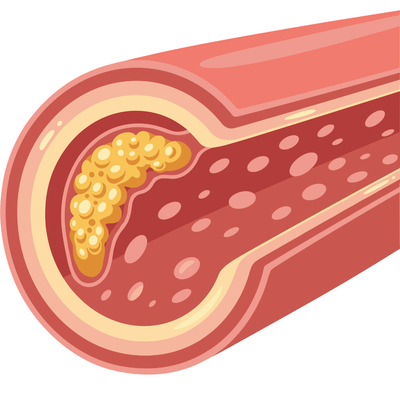
Cholesterol is often misunderstood. Many patients think it is entirely harmful, but in reality, cholesterol is essential for the body. It plays a role in hormone production, cell membrane structure, and vitamin synthesis. The problem arises when cholesterol levels become imbalanced, particularly when “bad cholesterol” increases and begins to damage blood vessels.
Read More
Inflammation is one of the most essential yet misunderstood processes within the human body. It is not merely a symptom but a vital biological response that plays a central role in healing and defense. At the same time, when it becomes uncontrolled, it can silently contribute to the development of serious diseases. This dual nature raises an important question: Is inflammation a friend or a foe?
Read More
Fatigue is one of the most common complaints encountered in clinical practice. Almost every individual experiences tiredness at some point, often related to exertion, stress, or inadequate sleep. In most cases, this is physiological and self-limiting. However, when fatigue becomes persistent, unexplained, and disproportionate to activity, it transforms from a simple symptom into a clinical concern.
Read More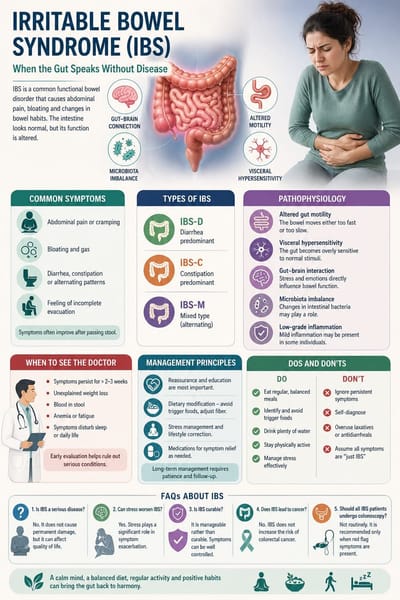
In clinical practice, few conditions challenge both the physician and the patient as much as Irritable Bowel Syndrome (IBS). It presents with real, often distressing symptoms, yet routine investigations frequently return normal results. This paradox—significant discomfort without identifiable structural disease—makes IBS a unique and often misunderstood condition.
Read More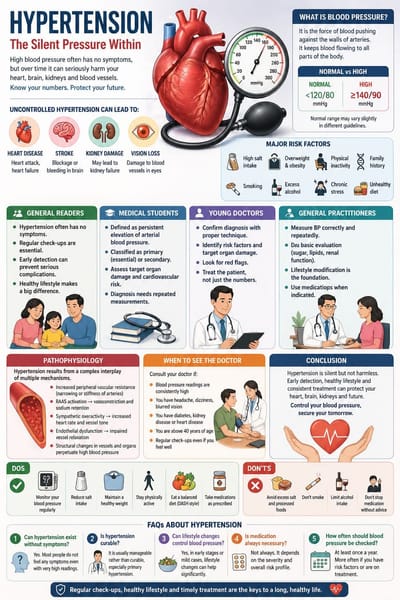
Hypertension, or high blood pressure, is one of the most common yet deceptively silent conditions encountered in medical practice. Unlike many illnesses, it often progresses without noticeable symptoms, quietly affecting vital organs over years.
Read More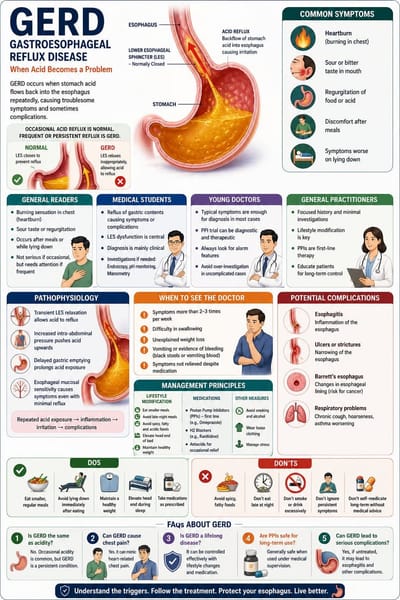
Gastroesophageal Reflux Disease (GERD) is one of the most frequently encountered conditions in clinical practice. It represents a disturbance not of structure, but of function—where the normal barrier between the stomach and the esophagus fails to maintain its integrity.
Read More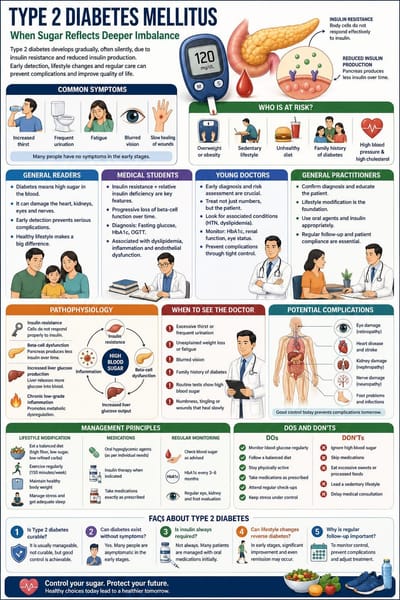
Type 2 Diabetes Mellitus is no longer merely a metabolic disorder—it is a reflection of a broader imbalance within the body. It develops gradually, often silently, and becomes evident only when its effects begin to interfere with normal physiology. Unlike acute illnesses, diabetes does not announce itself dramatically. It evolves over years, shaped by lifestyle, genetics, and metabolic stress. By the time it is diagnosed, the process is often well established.
Read More
Osteoarthritis is one of the most common chronic conditions encountered in clinical practice, particularly with advancing age. It is often described as a “wear and tear” disease, but this simplification does not fully capture its complexity. In reality, osteoarthritis represents a gradual imbalance between joint breakdown and repair. It is a condition where structure, function, and time intersect—leading to pain, stiffness, and reduced mobility.
Read More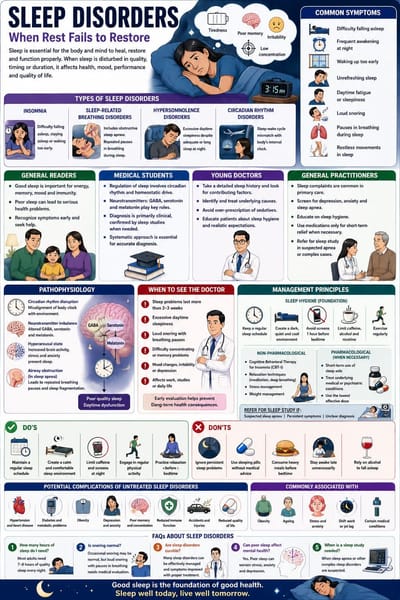
Sleep is not merely a period of rest—it is an active, essential process through which the body repairs, restores, and resets itself. When sleep is disturbed, the effects are not limited to tiredness alone; they extend to physical health, mental clarity, emotional balance, and overall functioning.
Read MoreAnxiety is a natural human emotion—an essential response that prepares the body to face challenges and potential threats. In its normal form, it enhances alertness and performance. However, when anxiety becomes excessive, persistent, and disproportionate to the situation, it evolves into a disorder.
Read More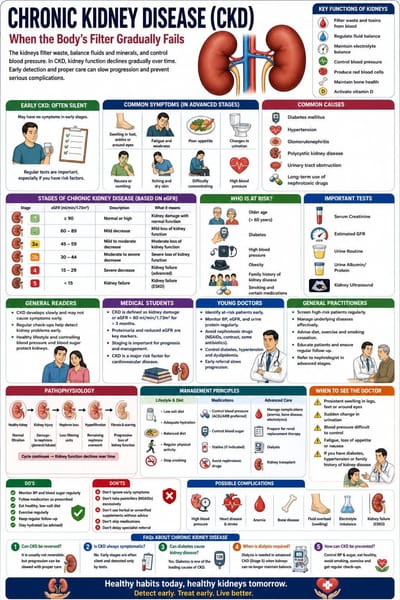
The kidneys are among the most vital yet quietly functioning organs in the human body. They continuously filter blood, remove waste products, regulate fluid balance, and maintain electrolyte stability. When this function begins to decline gradually over time, the condition is known as Chronic Kidney Disease (CKD).
Read More