Type 2 Diabetes Mellitus: When Sugar Reflects Deeper Imbalance
Introduction
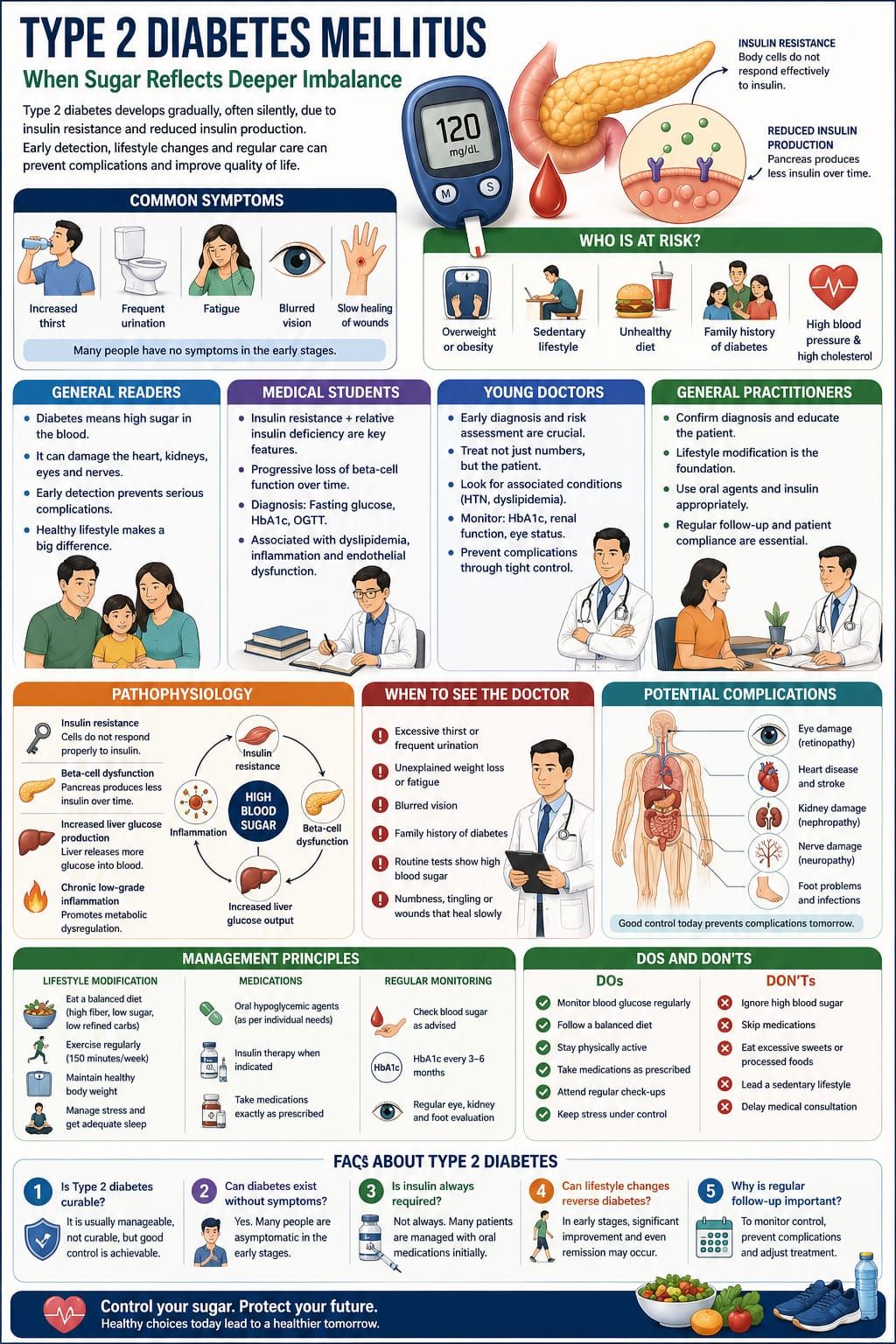
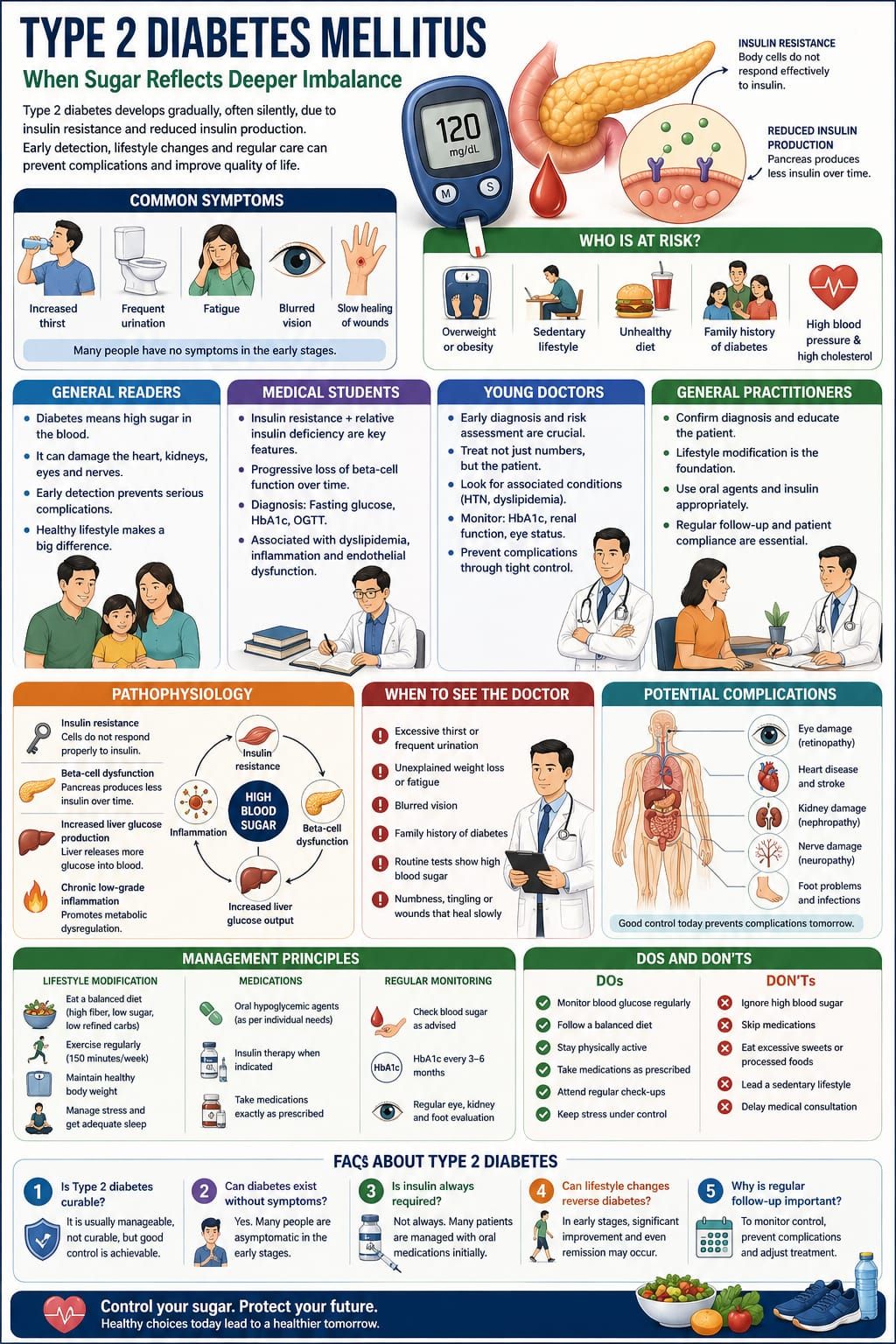
Type 2 Diabetes Mellitus is no longer merely a metabolic disorder—it is a reflection of a broader imbalance within the body. It develops gradually, often silently, and becomes evident only when its effects begin to interfere with normal physiology.
Unlike acute illnesses, diabetes does not announce itself dramatically. It evolves over years, shaped by lifestyle, genetics, and metabolic stress. By the time it is diagnosed, the process is often well established.
For the physician, diabetes is not just about elevated blood glucose—it is about understanding a systemic disturbance affecting multiple organs.
General Readers
Diabetes occurs when the level of sugar (glucose) in the blood becomes higher than normal.
This may happen because:
• The body does not produce enough insulin
• Or the body does not use insulin effectively
Common symptoms may include:
• Increased thirst
• Frequent urination
• Unexplained fatigue
• Blurred vision
• Slow healing of wounds
However, many individuals remain symptom-free in the early stages. This is why diabetes is often detected during routine testing.
If left uncontrolled, it can affect:
• Heart
• Kidneys
• Eyes
• Nerves
Medical Students
Type 2 Diabetes Mellitus is characterized by:
• Insulin resistance
• Relative insulin deficiency
Key Concepts
• Progressive disease with declining beta-cell function
• Strong association with obesity and sedentary lifestyle
• Diagnosis based on:
• Fasting blood glucose
• HbA1c
• Oral glucose tolerance test
Clinical Insight
Hyperglycemia is only one aspect. The disease also involves dyslipidemia, inflammation, and endothelial dysfunction.
Young Doctors
Diabetes management requires a comprehensive and individualized approach.
Clinical priorities:
• Early diagnosis
• Risk stratification
• Prevention of complications
Important considerations:
• Do not delay treatment in uncontrolled cases
• Address associated conditions:
• Hypertension
• Dyslipidemia
• Monitor regularly:
• HbA1c
• Renal function
• Eye status
Avoid focusing only on glucose numbers—consider the overall metabolic profile.
General Practitioners
Diabetes is a cornerstone of primary care practice.
Practical Approach
• Confirm diagnosis with standard criteria
• Educate the patient about the disease
Management Principles
• Lifestyle modification:
• Dietary control
• Physical activity
• Weight management
• Pharmacological therapy:
• Oral hypoglycemic agents
• Insulin when required
• Regular follow-up is essential
Patient compliance and understanding significantly influence outcomes.
Pathophysiology
Type 2 Diabetes results from a combination of metabolic disturbances.
Key mechanisms include:
• Insulin resistance
Peripheral tissues (muscle, fat) fail to respond effectively to insulin
• Beta-cell dysfunction
Pancreatic cells gradually lose their ability to produce insulin
• Increased hepatic glucose production
Liver continues to produce glucose despite high blood sugar levels
• Chronic low-grade inflammation
Contributes to metabolic dysregulation
Over time, these mechanisms interact, leading to persistent hyperglycemia and its complications.
When to See the Doctor
Medical evaluation is necessary if:
• There are symptoms such as:
• Excessive thirst
• Frequent urination
• Unexplained weight loss
• There is a family history of diabetes
• Routine blood tests show elevated glucose
• There are complications such as:
• Vision problems
• Numbness or tingling
Early diagnosis allows better control and prevention of complications.
Type 2 Diabetes Mellitus is not simply a disease of sugar—it is a disease of imbalance. It reflects a disruption in how the body processes, stores, and utilizes energy.
For the physician, it demands a long-term, holistic approach.
For the patient, it requires awareness, discipline, and sustained lifestyle changes.
Control of diabetes is not achieved overnight. It is a continuous process—one that protects not just blood sugar levels, but the integrity of the entire body.
Dos and Don’ts
Do
• Monitor blood glucose regularly
• Follow a balanced and controlled diet
• Stay physically active
• Take medications as prescribed
• Attend regular medical check-ups
Don’t
• Ignore high blood sugar levels
• Skip medications
• Consume excessive sugary or processed foods
• Lead a sedentary lifestyle
• Delay medical consultation
FAQs About Type 2 Diabetes Mellitus
1. Is Type 2 diabetes curable?
It is usually manageable, not curable, but good control is achievable.
2. Can diabetes exist without symptoms?
Yes. Many patients are asymptomatic initially.
3. Is insulin always required?
Not always. Many patients are managed with oral medications initially.
4. Can lifestyle changes reverse diabetes?
In early stages, significant improvement and even remission may occur.
5. Why is regular follow-up important?
To monitor control and prevent long-term complications.

By Dr. Mohammed Tanweer Khan
A Proactive/Holistic Physician
Founder of WithinTheBody.com