Sleep Disorders: When Rest Fails to Restore
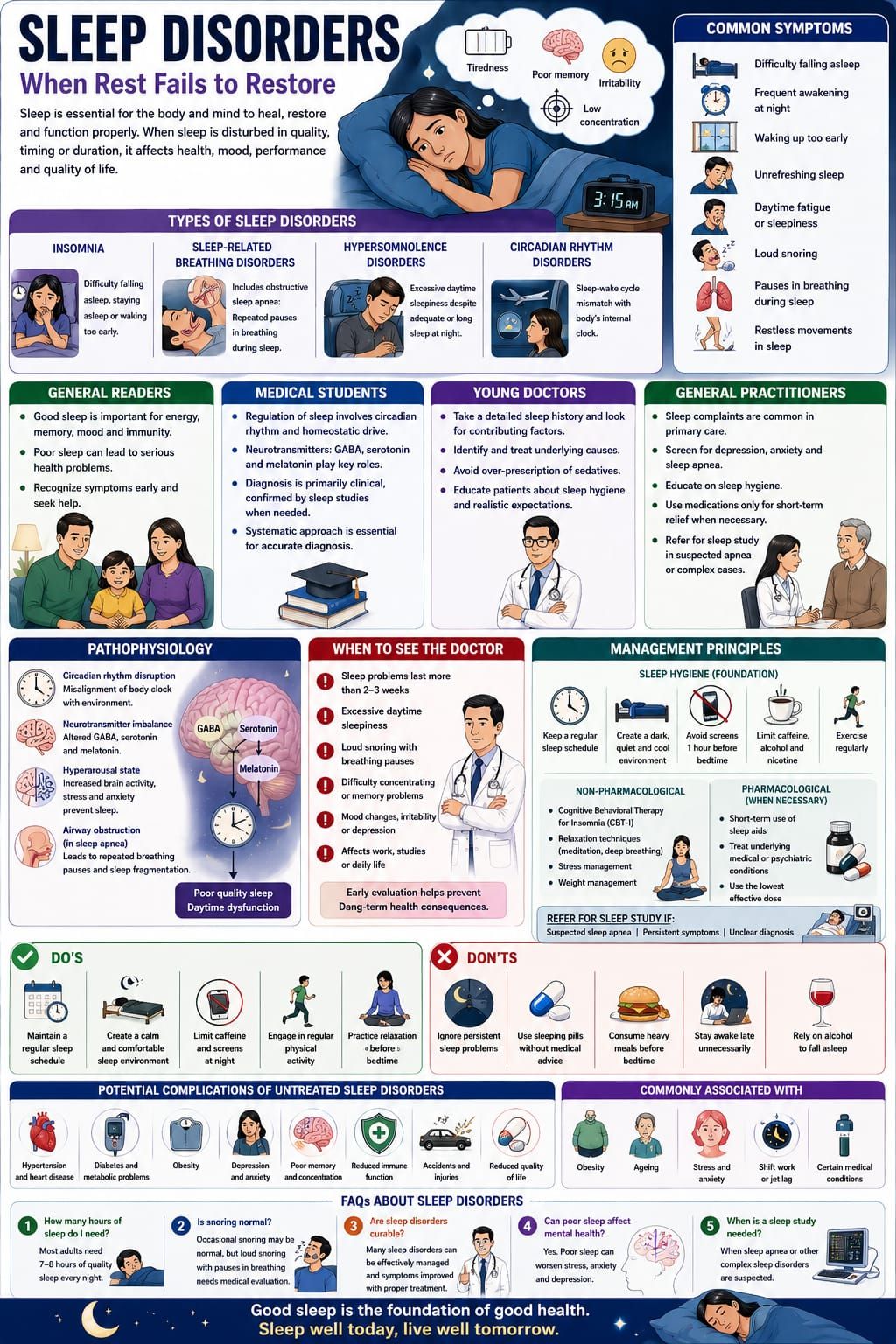
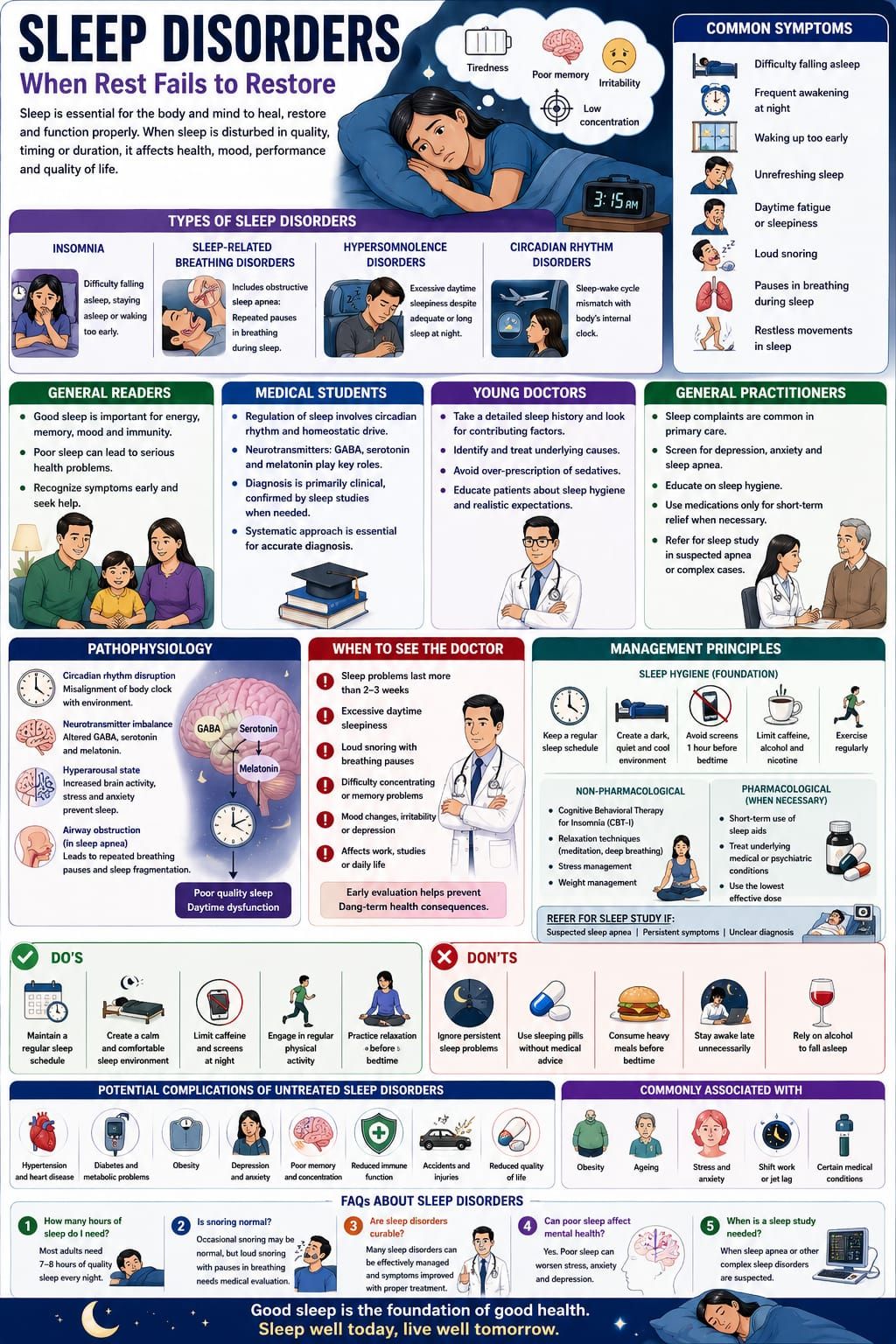
Sleep is not merely a period of rest—it is an active, essential process through which the body repairs, restores, and resets itself. When sleep is disturbed, the effects are not limited to tiredness alone; they extend to physical health, mental clarity, emotional balance, and overall functioning.
Sleep disorders represent a group of conditions where the quality, timing, or duration of sleep is impaired. In modern life, these disorders are increasingly common, often overlooked, and frequently underestimated.
For the physician, disturbed sleep is not just a symptom—it is often a window into deeper physiological and psychological imbalance.
General Readers
Everyone experiences occasional poor sleep, but a sleep disorder is different. It persists, affects daily functioning, and does not resolve easily.
Common complaints include:
• Difficulty falling asleep
• Frequent awakening during the night
• Waking up too early
• Feeling unrefreshed after sleep
• Daytime fatigue or sleepiness
Some individuals may also experience:
• Loud snoring
• Pauses in breathing during sleep
• Restless movements
Sleep problems can affect mood, concentration, memory, and overall health.
Medical Students
Sleep disorders can be broadly classified into:
• Insomnia – difficulty initiating or maintaining sleep
• Sleep-related breathing disorders – e.g., obstructive sleep apnea
• Hypersomnolence disorders – excessive daytime sleepiness
• Circadian rhythm disorders – disrupted sleep-wake cycle
Key Concepts
• Sleep is regulated by circadian rhythm and homeostatic drive
• Neurotransmitters (GABA, serotonin, melatonin) play key roles
• Diagnosis is primarily clinical, supported by sleep studies when required
A systematic approach is essential for accurate diagnosis.
Young Doctors
Sleep disorders often have multifactorial causes.
Clinical approach should include:
• Detailed sleep history:
• Sleep duration
• Sleep environment
• Use of stimulants (caffeine, screens)
• Identify contributing factors:
• Stress and anxiety
• Medical conditions
• Medications
Important considerations:
• Avoid over-prescription of sedatives
• Address underlying causes rather than symptoms alone
Patient education is a key component of management.
General Practitioners
Sleep complaints are common in primary care.
Practical Approach
• Focused history and lifestyle assessment
• Screen for:
• Depression and anxiety
• Obstructive sleep apnea (especially in obese patients)
Management Principles
• Sleep hygiene education:
• Regular sleep schedule
• Limiting screen exposure before bed
• Creating a comfortable sleep environment
• Short-term medication when necessary
• Referral for sleep study in suspected apnea
Long-term improvement depends largely on behavioral changes.
Pathophysiology
Sleep is regulated by a complex interaction between the brain, hormones, and environmental cues.
Key mechanisms include:
• Circadian rhythm disruption
Misalignment of internal body clock with external environment
• Neurotransmitter imbalance
Altered levels of GABA, serotonin, and melatonin
• Hyperarousal state
Increased brain activity preventing sleep initiation
• Airway obstruction (in sleep apnea)
Leads to repeated interruptions in breathing and sleep fragmentation.
These mechanisms lead to poor-quality sleep and impaired daytime functioning.
When to See the Doctor
Medical consultation is necessary if:
• Sleep problems persist for more than 2–3 weeks
• There is excessive daytime sleepiness
• Loud snoring with breathing pauses is present
• Sleep disturbance affects daily life
Early evaluation helps prevent long-term health consequences.
Sleep disorders reflect a disturbance in one of the body’s most fundamental processes. They are not merely inconveniences but indicators of imbalance that can affect nearly every system.
For the physician, they require careful evaluation beyond simple symptom control.
For the patient, they emphasize the importance of routine, environment, and mental calm.
Restorative sleep is not a luxury—it is a necessity. When sleep is restored, many aspects of health begin to improve naturally.
Dos and Don’ts
Do
• Maintain a regular sleep schedule
• Create a calm, dark sleep environment
• Limit caffeine and screen exposure at night
• Engage in regular physical activity
Don’t
• Ignore persistent sleep problems
• Use sleeping pills without medical advice
• Consume heavy meals before bedtime
• Stay awake late unnecessarily
FAQs About Sleep Disorders
1. How many hours of sleep are necessary?
Most adults require 7–8 hours of quality sleep.
2. Is insomnia always psychological?
No. It can have physical, environmental, or neurological causes.
3. Are sleeping pills safe?
They should be used cautiously and under medical supervision.
4. Can poor sleep affect physical health?
Yes. It can impact heart health, metabolism, and immunity.
5. What is the most common sleep disorder?
Insomnia is the most commonly reported sleep problem.


By Dr. Mohammed Tanweer Khan
A Proactive/Holistic Physician
Founder of WithinTheBody.com