Chronic Kidney Disease (CKD): When the Body’s Filter Gradually Fails
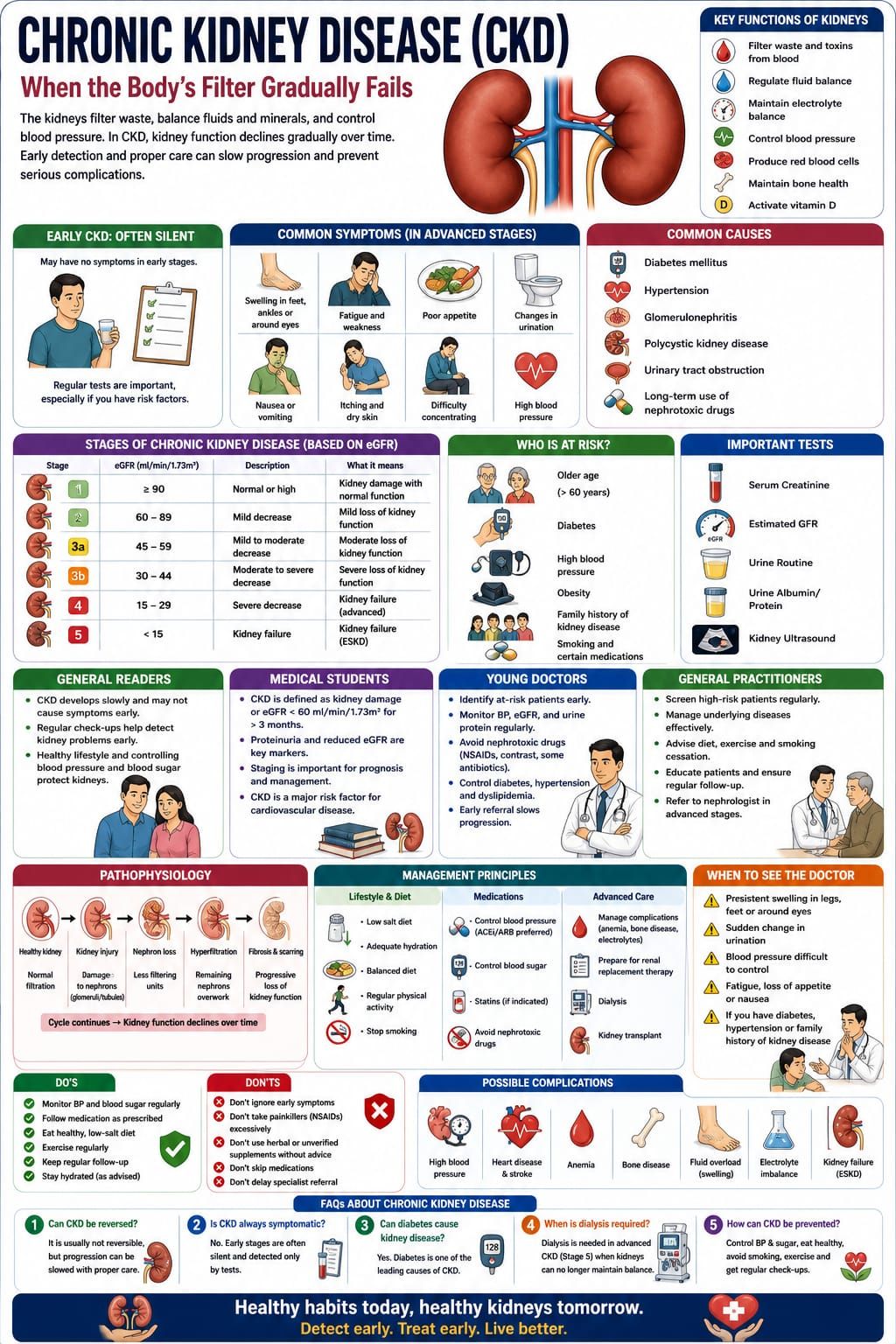
The kidneys are among the most vital yet quietly functioning organs in the human body. They continuously filter blood, remove waste products, regulate fluid balance, and maintain electrolyte stability. When this function begins to decline gradually over time, the condition is known as Chronic Kidney Disease (CKD).
Unlike acute illnesses, CKD develops silently. In its early stages, it may produce little or no symptoms, yet progressive damage continues beneath the surface. By the time symptoms become apparent, significant loss of kidney function may already have occurred.
For the physician, CKD represents a condition where early detection is crucial, and prevention of progression becomes the central goal.
General Readers
The kidneys act as the body’s natural filtration system. They remove toxins and excess fluid from the blood and help maintain balance within the body.
In CKD, this filtering ability gradually reduces.
Early on, there may be no symptoms. As the disease progresses, individuals may notice:
• Swelling in the feet or around the eyes
• Fatigue and weakness
• Reduced appetite
• Changes in urination (frequency or quantity)
• Nausea or general discomfort
CKD is commonly associated with conditions such as diabetes and high blood pressure.
Medical Students
Chronic Kidney Disease is defined as:
• Structural or functional kidney abnormalities persisting for more than 3 months, with or without reduced glomerular filtration rate (GFR)
Stages (Based on GFR)
• Stage 1 to Stage 5 (progressive decline in kidney function)
Common Causes
• Diabetes mellitus
• Hypertension
• Glomerulonephritis
• Polycystic kidney disease
Key Clinical Points
• CKD is often asymptomatic in early stages
• Proteinuria is an important marker
• Early identification can slow progression
Young Doctors
CKD requires a proactive and preventive approach.
Clinical priorities:
• Identify at-risk individuals:
• Diabetics
• Hypertensive patients
• Monitor regularly:
• Serum creatinine
• Estimated GFR
• Urine protein
Important considerations:
• Avoid nephrotoxic drugs
• Adjust drug doses according to renal function
• Address comorbidities aggressively
Early intervention can significantly delay progression.
General Practitioners
CKD is frequently encountered in primary care, often as a complication of common diseases.
Practical Approach
• Screen high-risk patients regularly
• Basic investigations:
• Serum creatinine
• Urine routine and protein
Management Principles
• Control underlying causes:
• Blood sugar (in diabetes)
• Blood pressure
• Lifestyle modification:
• Salt restriction
• Fluid balance
• Healthy diet
• Timely referral to nephrologist in advanced stages
Patient education is essential for long-term management.
Pathophysiology
CKD involves progressive loss of functioning nephrons.
Key mechanisms include:
• Glomerular damage
Leads to reduced filtration capacity
• Proteinuria-induced injury
Proteins in urine further damage kidney structures
• Fibrosis and scarring
Replacement of normal tissue with non-functional tissue
• Adaptive hyperfiltration
Remaining nephrons overwork, accelerating damage
These processes create a cycle of gradual decline in kidney function.
When to See the Doctor
Medical consultation is necessary if:
• There is persistent swelling
• Blood pressure is difficult to control
• There are changes in urination
• Routine tests show abnormal kidney function
• There is known diabetes or hypertension
Early evaluation can prevent serious complications.
Chronic Kidney Disease is a condition of silent progression, where loss of function occurs gradually but steadily. It reflects the long-term impact of systemic diseases and lifestyle factors on one of the body’s most essential organs.
For the physician, it requires vigilance, early detection, and continuous management.
For the patient, it emphasizes the importance of regular monitoring and disciplined control of underlying conditions.
In CKD, prevention and early intervention are far more effective than late treatment.
Dos and Don’ts
Do
• Monitor blood pressure and blood sugar regularly
• Follow dietary advice (low salt, balanced protein)
• Stay hydrated appropriately
• Take medications as prescribed
Don’t
• Ignore early symptoms or abnormal test results
• Use painkillers excessively without advice
• Skip follow-up visits
• Delay specialist consultation when advised
FAQs About Chronic Kidney Disease (CKD)
1. Can CKD be reversed?
It is usually not reversible, but progression can be slowed.
2. Is CKD always symptomatic?
No. Early stages are often silent.
3. Can diabetes cause kidney disease?
Yes. It is one of the leading causes.
4. When is dialysis required?
In advanced stages when kidney function is severely reduced.
5. How can CKD be prevented?
By controlling blood pressure, blood sugar, and maintaining a healthy lifestyle.


By Dr. Mohammed Tanweer Khan
A Proactive/Holistic Physician
Founder of WithinTheBody.com