Anxiety Disorders: When the Mind Remains in a State of Alarm
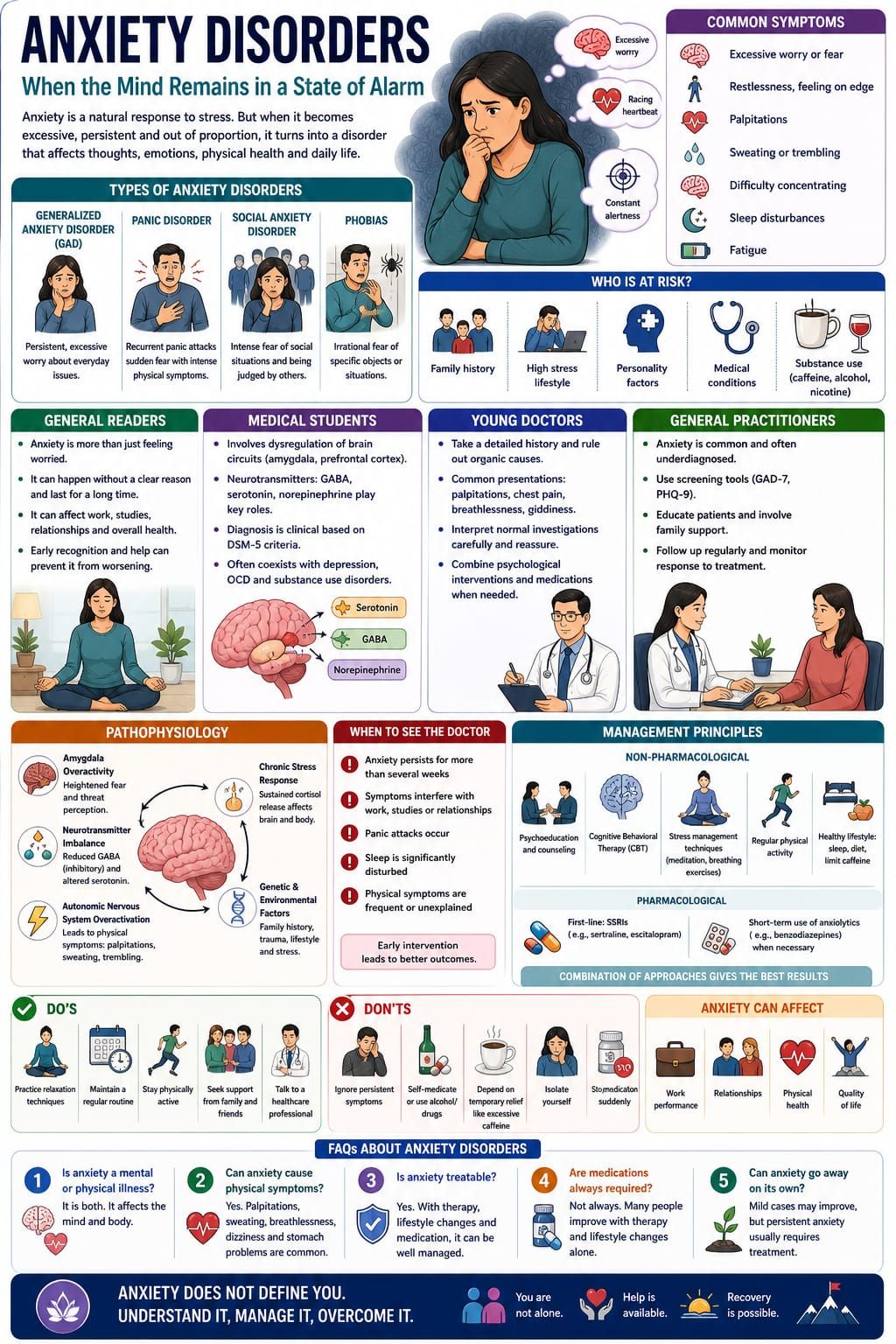
Anxiety is a natural human emotion—an essential response that prepares the body to face challenges and potential threats. In its normal form, it enhances alertness and performance. However, when anxiety becomes excessive, persistent, and disproportionate to the situation, it evolves into a disorder.
Anxiety disorders represent a state in which the mind remains continuously alert, even in the absence of real danger. This ongoing “alarm state” affects not only thoughts and emotions but also the body’s physical functioning.
For the physician, anxiety is not merely psychological—it is a condition with clear physiological manifestations and real impact on health.
General Readers
Everyone experiences anxiety at times—before an exam, an important meeting, or a difficult decision. This is normal.
However, anxiety becomes a concern when it:
• Persists for long periods
• Occurs without a clear reason
• Interferes with daily life
Common symptoms include:
• Excessive worry or fear
• Restlessness or feeling “on edge”
• Palpitations
• Sweating or trembling
• Difficulty concentrating
• Sleep disturbances
These symptoms may appear suddenly or remain present in a subtle but continuous manner.
Medical Students
Anxiety disorders include a spectrum of conditions:
• Generalized Anxiety Disorder (GAD)
• Panic Disorder
• Social Anxiety Disorder
• Phobias
Key Concepts
• Involves dysregulation of fear circuits in the brain
• Neurotransmitters involved:
• GABA
• Serotonin
• Norepinephrine
• Diagnosis is clinical, based on symptom patterns and duration
Anxiety often coexists with depression and other psychiatric or medical conditions.
Young Doctors
Anxiety frequently presents with physical symptoms, leading patients to seek medical rather than psychiatric care.
Clinical approach:
• Rule out organic causes:
• Thyroid disorders
• Cardiac conditions
• Drug-induced symptoms
• Recognize common presentations:
• Palpitations without cardiac disease
• Breathlessness with normal oxygenation
Important considerations:
• Avoid dismissing symptoms as “just anxiety”
• Provide reassurance with explanation
• Combine psychological and pharmacological management when needed
General Practitioners
Anxiety is common in primary care and often underdiagnosed.
Practical Approach
• Detailed history:
• Onset and triggers
• Impact on daily functioning
• Associated depression or sleep issues
• Screening tools may be helpful
Management Principles
• Non-pharmacological:
• Counseling
• Cognitive behavioral strategies
• Stress management
• Pharmacological:
• SSRIs (first-line in many cases)
• Short-term use of anxiolytics when necessary
Continuity of care and patient trust are essential.
Pathophysiology
Anxiety disorders arise from dysregulation of brain circuits responsible for fear and emotional processing.
Key mechanisms include:
• Amygdala overactivity
Leads to heightened fear perception
• Neurotransmitter imbalance
Reduced GABA (inhibitory) and altered serotonin levels
• Hyperactivation of the autonomic nervous system
Causes physical symptoms such as palpitations and sweating
• Chronic stress response
Sustained cortisol release affects both brain and body
These mechanisms explain why anxiety manifests with both psychological and physical symptoms.
When to See the Doctor
Medical consultation is necessary if:
• Anxiety persists for several weeks
• Symptoms interfere with daily life
• There are panic attacks
• Sleep is significantly disturbed
• Physical symptoms (palpitations, breathlessness) are frequent
Early intervention improves outcomes significantly.
Anxiety disorders represent a state where the mind’s natural alert system becomes overactive and unregulated. What is meant to protect begins to overwhelm.
For the physician, it requires careful listening, reassurance, and a holistic approach.
For the patient, it involves understanding that these symptoms are real, manageable, and treatable.
Restoring calm is not about eliminating stress completely—it is about retraining the mind and body to respond appropriately.
Dos and Don’ts
Do
• Practice relaxation techniques
• Maintain a regular routine
• Engage in physical activity
• Seek support when needed
Don’t
• Ignore persistent anxiety
• Self-medicate
• Depend solely on temporary relief measures
• Isolate yourself
FAQs About Anxiety Disorders
1. Is anxiety a mental or physical illness?
It is both—affecting mind and body together.
2. Can anxiety cause physical symptoms?
Yes. Palpitations, sweating, and breathlessness are common.
3. Is anxiety treatable?
Yes. With proper therapy and medication, it can be well managed.
4. Are medications always required?
Not always. Many cases improve with therapy and lifestyle changes.
5. Can anxiety go away on its own?
Mild cases may improve, but persistent anxiety usually requires attention.

By Dr. Mohammed Tanweer Khan
A Proactive/Holistic Physician
Founder of WithinTheBody.com