Spiritual Anatomy - The Inner Map of the Human Soul
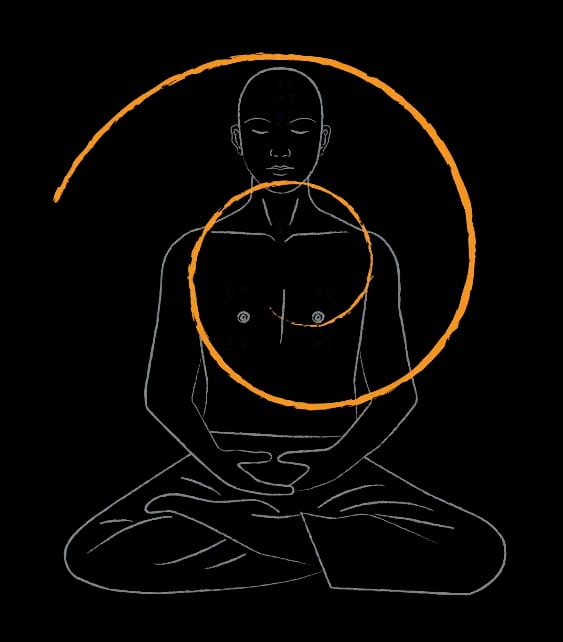
When we speak of anatomy, we usually think of muscles, bones, organs, and systems — the tangible layers of the human body. But just as the body has a physical structure, it also carries a spiritual structure — subtle, invisible, yet profoundly influential. This is what we call Spiritual Anatomy.
Every human being is more than skin and cells. We are a composite of consciousness, emotions, energy, and soul. Spiritual anatomy is the study of this inner landscape — the map of how our spirit lives and moves within the body.
What Is Spiritual Anatomy?
Spiritual anatomy refers to the non-physical dimensions of our being that guide our thoughts, emotions, purpose, and connection with the Divine or the Universe.
It includes:
• Energy centers (chakras)
• Subtle channels (nadis or meridians)
• The breath as life force (prana, ruḥ)
• The heart as a seat of consciousness
• The soul (nafs, rooh) as the eternal core
These are not metaphors. In many spiritual traditions — including Sufism, Hinduism, Buddhism, and even Christian mysticism — this internal structure is considered more important than the physical body, because it outlives it.
The Layers of Spiritual Anatomy
• The Physical Body (Jism)
• The outer shell, made of matter
• Vehicle of action and experience
• The Energy Body (Prana Sharir)
• Flow of vital force through channels
• Blockages here cause disease before they appear in the body
• The Emotional Body (Manas)
• Houses feelings, desires, attachments
• Needs purification for inner peace
• The Mental Body (Buddhi)
• Seat of intellect, judgment, memory
• Can either guide the soul or be clouded by ego
• The Soul or Spirit (Atman, Rooh)
• Pure, eternal, untouched
• Our deepest identity beyond thought, body, and emotion
Chakras: The Energy Centers
Chakras are not imaginary wheels — they are psychic and energetic nodes that influence both health and spiritual awareness. Some key chakras include:
• Root Chakra – Survival, security
• Heart Chakra – Love, empathy
• Third Eye Chakra – Intuition, inner vision
• Crown Chakra – Divine connection
Blocked chakras can manifest as both emotional imbalance and physical symptoms.
Breath: The Bridge Between Body and Spirit
In every tradition, the breath is sacred.
In Islam, it is ruḥ — the divine breath blown into Adam.
In yoga, it is prana — the vehicle of life itself.
Controlling the breath calms the mind, centers the energy, and awakens the soul.
Why Spiritual Anatomy Matters
Because true healing is not only physical.
We suffer from wounds of the heart, diseases of the ego, and silence of the soul.
Doctors may heal the body — but healing the spirit requires awareness, reflection, and surrender.
When you understand your spiritual anatomy:
• You no longer fear death
• You begin to live with purpose
• You start healing from within, not just from outside
A Physician’s Reflection
I have seen patients heal in the absence of medicine — and suffer despite it.
Because what they needed was not just a tablet — but truth, forgiveness, love, and meaning.
Spiritual anatomy teaches us: “We are not human beings having a spiritual experience; we are spiritual beings having a human experience.”
Spiritual anatomy reminds us that beneath this skin and bone lies a temple — vast, intelligent, sacred.
If the body is a house, then the spirit is the light that fills it.
You don’t have to believe it blindly. Just close your eyes, breathe, and listen.
The map is already within you.
Also read ' Energy Body ", " Does Our Body Speak ? ", " Silent Organs ".
Physician’s Advice Corner
Do you have questions about the topic ? Kindly share them in the comments below or email us at info@withinthebody.com or message us on WhatsApp at 0092 320 8708835.
If you like the article or our website, kindly share the link with your contacts.
Your health is your responsibility — but you don’t have to manage it alone. The right knowledge, at the right time, can save lives.
Every human being carries within himself a silent architecture — a structure far deeper than what is visible to the eye or detectable through machines. The human body, though seemingly physical, is the visible face of an invisible force. It is the shadow of something far subtler — the spirit, which animates, organizes, and directs every living cell. To study anatomy only through dissections and imaging is to know the form but miss the essence. The true anatomy of man is spiritual — a network of energy, awareness, and moral resonance flowing through the biological frame.
The body, in this light, is not merely a vessel; it is a conversation between matter and meaning. Every beat of the heart carries not only blood but emotion; every breath carries not only oxygen but a reflection of life’s rhythm. The mind, in turn, serves as the bridge — a translator between body and soul, balancing the impulses of the flesh with the aspirations of the spirit. Whenever this harmony breaks, disease appears — sometimes in the body, sometimes in the mind, and sometimes as a quiet corrosion of the soul.
We often believe that illness begins with infection or imbalance in chemicals. Yet, long before biochemistry falters, the inner architecture begins to tremble. Anger unsettles the liver before enzymes rise; grief constricts the lungs before breathlessness appears; anxiety strains the heart before the ECG reveals it. Spiritual anatomy helps us see these unseen processes — how feelings become physical and how silence, sorrow, or sin can slowly translate into suffering.
To understand spiritual anatomy is to see life as a continuum of visible and invisible forces. Every organ plays a double role — one physiological, one spiritual. The heart is not only a pump but the throne of compassion, courage, and love. The lungs are not only for respiration but for release — teaching us how to let go of pain and draw in peace. The brain is not only a command center but the mirror of consciousness, where thoughts shape reality. Even the skin, our largest organ, reflects the boundaries of our identity — how open or closed we are to the world. The body, therefore, is not a collection of parts but a map of the spirit’s journey.
The mind occupies a sacred place in this design. It is the space where decisions, dreams, and doubts intermingle. When purified through awareness and discipline, the mind becomes a healing field; when polluted with negativity, it becomes toxic to the body. Thoughts are biochemical realities — they alter hormones, immune responses, and even gene expression. Thus, spirituality is not an escape from science; it is science viewed in its entirety.
Every disease, in some sense, reflects a conflict — between what we do and what we know we should do, between what we feel and what we express, between the body’s rhythm and the soul’s purpose. Modern medicine has made extraordinary progress in managing symptoms, but it often overlooks the origin of imbalance — the inner discord that precedes dysfunction. A physician, therefore, must not only treat tissues but also listen to silences. Healing begins where understanding deepens.
True medicine, in its purest form, has always been a moral act — a dialogue between two souls, not just two bodies. When a doctor listens with empathy, half of the treatment begins. When a patient feels seen as a whole being rather than a set of organs, the spirit starts to align. This is the hidden anatomy of healing — where science and spirituality are not rivals but companions.
The diseases of modern life — hypertension, diabetes, anxiety, and depression — often arise less from infection and more from disconnection. We have become experts in measuring body fat but ignorant of measuring inner emptiness. We know how to monitor the pulse but not how to steady it through peace. Spiritual anatomy reminds us that health is not the absence of disease but the presence of harmony. It is the alignment of thought, feeling, and action with the moral rhythm of existence.
When this alignment is lost, fatigue follows; not the fatigue of muscles, but of meaning. The cure, then, is not only in medication but in rediscovering purpose. Silence, reflection, gratitude, and forgiveness are not religious rituals — they are physiological restorers. They balance the nervous system, lower stress hormones, and allow the body to repair itself naturally. A man at peace within will rarely fall ill, and when he does, he will heal faster — for his biology listens to his beliefs.
The more deeply we observe, the more evident it becomes that each person carries his own internal universe. The flow of blood imitates the flow of time, the breath mirrors the tides of existence, and the pulse synchronizes with the rhythm of creation itself. Life, in all its complexity, is the dance of the visible and the invisible — body, mind, and spirit moving together in an intricate, unseen harmony.
As physicians, we must learn to see not only with instruments but with insight. The stethoscope can hear the heart’s rhythm, but not its ache. The lab can report values, but not virtues. Machines can image the brain, but not consciousness. To heal in the truest sense, we must look at a patient not as an organism but as a being — physical, emotional, and spiritual — whose anatomy extends beyond what the eye can see.
In the end, spiritual anatomy teaches us humility — the recognition that no matter how advanced our knowledge becomes, there remains a mystery at the center of life that no scalpel can touch and no microscope can reveal. This mystery is not a limitation; it is our link to the divine. Every living body is a living miracle — a bridge between heaven and earth, between energy and matter, between prayer and pulse.
To know one’s spiritual anatomy is to walk the path of wholeness — to understand that healing is not merely recovery from disease, but a return to harmony with oneself and with creation. It is the rediscovery of the truth that within the body resides the spirit, and within the spirit, the light of life itself.
By Dr. Mohammed Tanweer Khan
A Proactive/Holistic Physician
Founder of WithinTheBody.com