Osteoporosis: When Bones Gradually Lose Their Strength
Introduction
Bones are often thought of as rigid and lifeless structures, yet they are living tissues that continuously undergo breakdown and rebuilding throughout life. This balance maintains bone strength and structural integrity.
Osteoporosis develops when bone loss exceeds bone formation, causing bones to become thin, fragile, and more susceptible to fractures. The process is usually slow and silent, progressing over years without noticeable symptoms until a fracture occurs.
For the physician, osteoporosis is not merely a disease of bones—it is a condition affecting mobility, independence, and quality of life, particularly in older adults.
General Readers
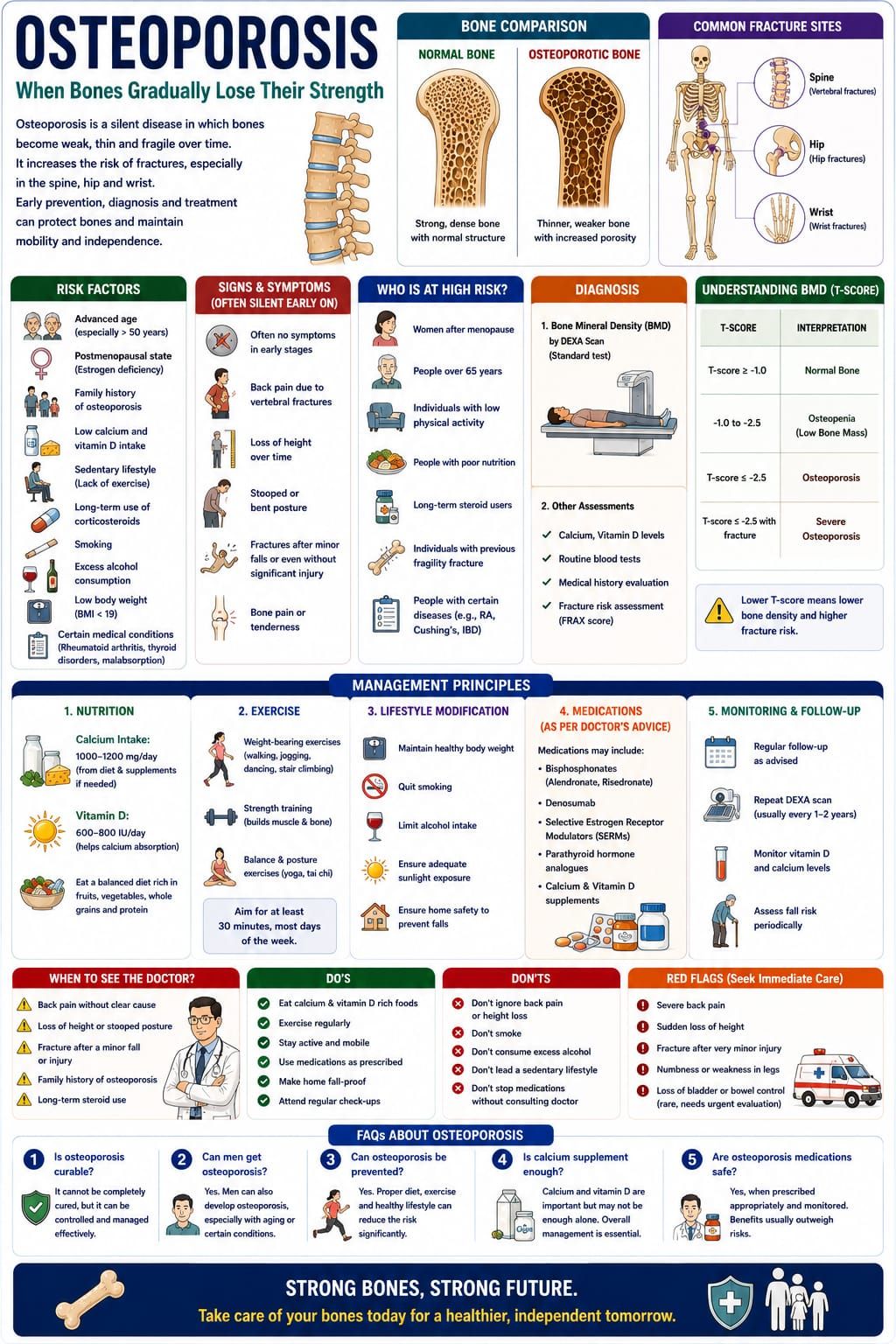
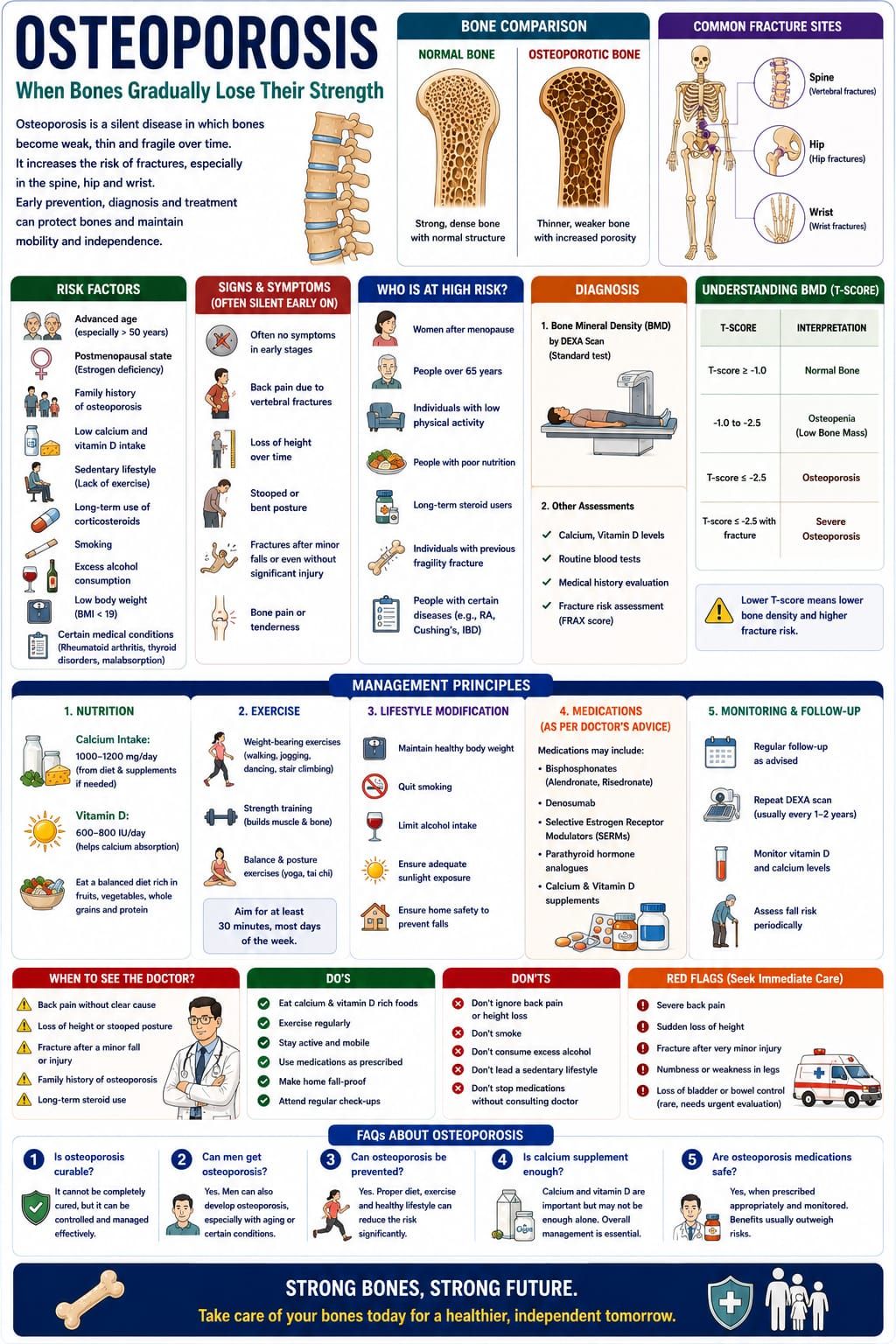
Osteoporosis means “porous bones.” In this condition, bones gradually lose density and strength.
As bones become weaker, even minor falls or injuries may lead to fractures, especially in:
• Spine
• Hip
• Wrist
Most people do not realize they have osteoporosis until a fracture occurs.
Some warning signs may include:
• Back pain
• Loss of height over time
• Stooped posture
Aging, reduced physical activity, and nutritional deficiencies commonly contribute to osteoporosis.
Medical Students
Osteoporosis is a systemic skeletal disorder characterized by:
• Reduced bone mass
• Microarchitectural deterioration of bone tissue
Key Concepts
• Imbalance between osteoclastic bone resorption and osteoblastic bone formation
• Diagnosed primarily through Bone Mineral Density (BMD) assessment using DEXA scan
Risk Factors
• Advanced age
• Postmenopausal state
• Vitamin D deficiency
• Prolonged corticosteroid use
• Sedentary lifestyle
Fragility fractures are a hallmark complication.
Young Doctors
Osteoporosis management requires a preventive and long-term approach.
Clinical priorities:
• Identify high-risk individuals:
• Elderly patients
• Postmenopausal women
• Long-term steroid users
• Assess fracture risk carefully
Important considerations:
• Calcium and vitamin D status are important
• Encourage weight-bearing exercise
• Fall prevention is a critical component of management
Do not wait for fractures before initiating evaluation.
General Practitioners
Osteoporosis is increasingly important in aging populations.
Practical Approach
• Evaluate:
• Dietary calcium intake
• Physical activity
• History of fractures
• Investigations:
• DEXA scan (when indicated)
• Vitamin D levels
Management Principles
• Lifestyle modification:
• Weight-bearing exercise
• Adequate nutrition
• Pharmacological therapy:
• Calcium and vitamin D supplementation
• Bisphosphonates in selected patients
Patient education about fall prevention is essential.
Pathophysiology
Osteoporosis develops through progressive loss of bone density and quality.
Key mechanisms include:
• Increased bone resorption
Osteoclast activity exceeds bone formation
• Reduced osteoblastic activity
Bone rebuilding becomes insufficient
• Hormonal changes
Particularly estrogen deficiency after menopause
• Calcium and vitamin D deficiency
Impair bone mineralization
These processes weaken bone architecture and increase fracture risk.
When to See the Doctor
Medical consultation is necessary if:
• There is loss of height or stooped posture
• Back pain develops without clear cause
• Fractures occur after minor trauma
• There are strong risk factors such as aging or steroid use
Early evaluation helps prevent disabling fractures.
Osteoporosis is a silent condition in which bones gradually lose their internal strength while outwardly appearing normal. Its greatest danger lies not in pain, but in the fractures and loss of independence that may follow.
For the physician, the emphasis must remain on prevention, early detection, and fracture risk reduction.
For the patient, maintaining bone health through nutrition, exercise, and regular evaluation becomes increasingly important with age.
Strong bones are not preserved by chance—they are preserved through lifelong care and balance.
Dos and Don’ts
Do
• Consume adequate calcium and vitamin D
• Engage in regular weight-bearing exercise
• Maintain sunlight exposure appropriately
• Prevent falls at home and outdoors
Don’t
• Ignore minor fractures or back pain
• Lead a sedentary lifestyle
• Smoke excessively or consume excess alcohol
• Use steroids unnecessarily without supervision
FAQs About Osteoporosis
1. Is osteoporosis only seen in women?
No. Men can also develop osteoporosis, especially with aging.
2. Can osteoporosis be prevented?
Yes. Healthy lifestyle and nutrition reduce risk significantly.
3. Is osteoporosis painful?
Usually not until fractures occur.
4. What is the best test for osteoporosis?
DEXA scan is the standard diagnostic test.
5. Can exercise help osteoporosis?
Yes. Weight-bearing exercise strengthens bones and muscles.


By Dr. Mohammed Tanweer Khan
A Proactive/Holistic Physician
Founder of WithinTheBody.com