Chronic Obstructive Pulmonary Disease (COPD): When Breathing Gradually Becomes Difficult
Introduction
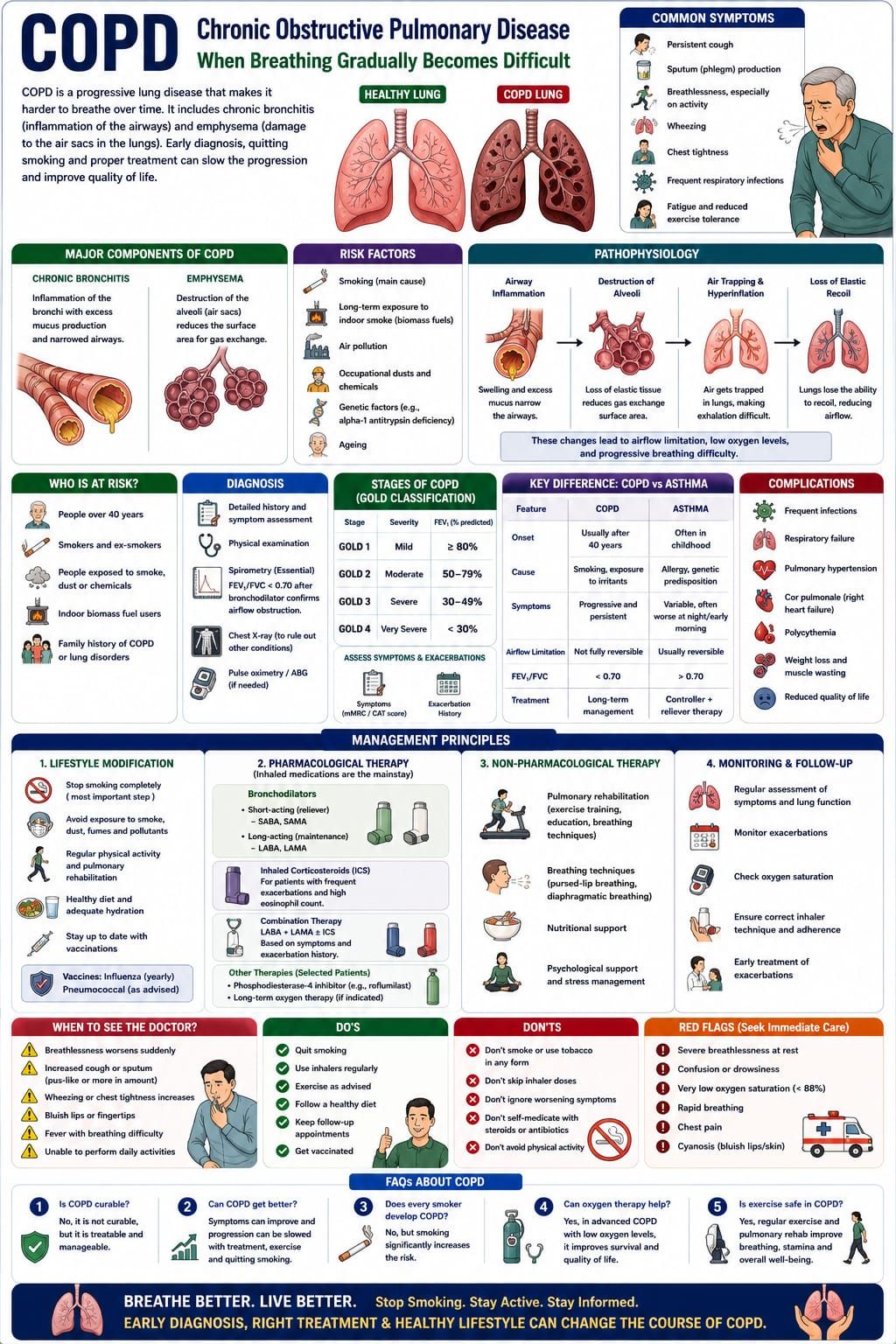
Breathing is one of the most constant and effortless functions of life—so natural that it often goes unnoticed until it becomes difficult. Chronic Obstructive Pulmonary Disease (COPD) is a condition in which airflow through the lungs becomes progressively limited, making breathing increasingly challenging over time.
COPD is not a single disease but a combination of chronic bronchitis and emphysema, both of which damage the lungs and airways gradually. Unlike sudden respiratory illnesses, COPD develops slowly, often over many years.
For the physician, COPD represents a chronic, progressive condition where early diagnosis, lifestyle modification, and long-term management play critical roles.
General Readers
COPD affects the lungs and makes it difficult to move air in and out properly.
Common symptoms include:
• Persistent cough
• Production of sputum (phlegm)
• Breathlessness, especially during activity
• Wheezing or chest tightness
In the early stages, symptoms may appear mild and are often ignored as “smoker’s cough” or normal aging. Over time, however, breathing difficulty gradually increases.
Smoking is the most common cause of COPD, although long-term exposure to dust, pollution, and indoor smoke can also contribute.
Medical Students
COPD is characterized by:
• Persistent respiratory symptoms
• Airflow limitation that is not fully reversible
Major Components
• Chronic bronchitis
• Emphysema
Key Concepts
• Airway inflammation and narrowing
• Destruction of alveolar walls
• Progressive decline in lung function
Diagnosis
• Spirometry is essential:
• Reduced FEV1/FVC ratio confirms airflow obstruction
COPD is preventable and treatable despite being progressive.
Young Doctors
COPD management requires a comprehensive respiratory and systemic approach.
Clinical priorities:
• Assess smoking history and exposure risks
• Determine severity using:
• Symptoms
• Spirometry
• Exacerbation frequency
Important considerations:
• Differentiate from asthma
• Monitor oxygen saturation and nutritional status
• Vaccination is important:
• Influenza
• Pneumococcal
Smoking cessation remains the single most effective intervention.
General Practitioners
COPD is a major burden in primary care practice.
Practical Approach
• Recognize chronic respiratory symptoms early
• Basic assessment:
• Smoking history
• Respiratory examination
• Pulse oximetry
Management Principles
• Lifestyle modification:
• Smoking cessation
• Pulmonary rehabilitation
• Exercise
• Pharmacological therapy:
• Bronchodilators
• Inhaled corticosteroids (selected patients)
• Educate about inhaler technique and adherence
Regular follow-up reduces exacerbations and hospitalizations.
Pathophysiology
COPD develops through chronic inflammation and structural lung damage.
Key mechanisms include:
• Airway inflammation
Causes narrowing and mucus production
• Destruction of alveoli (emphysema)
Reduces gas exchange surface area
• Air trapping and hyperinflation
Makes exhalation difficult
• Loss of elastic recoil
Impairs normal airflow dynamics
These changes progressively reduce respiratory efficiency and oxygen delivery.
When to See the Doctor
Medical consultation is necessary if:
• There is persistent cough or sputum production
• Breathlessness increases gradually
• Wheezing becomes frequent
• There is a history of smoking or exposure to smoke/dust
Urgent care is required if breathing suddenly worsens.
COPD is a condition of progressive respiratory limitation, where breathing gradually changes from an unconscious process into a conscious effort. It reflects the long-term effects of inflammation, environmental exposure, and structural lung damage.
For the physician, management extends beyond medication to education, prevention, and rehabilitation.
For the patient, the most powerful step remains early recognition and smoking cessation.
Although COPD is chronic and progressive, timely intervention can significantly improve quality of life and slow its progression.
Dos and Don’ts
Do
• Stop smoking completely
• Use inhalers correctly and regularly
• Stay physically active within limits
• Receive recommended vaccinations
Don’t
• Ignore worsening breathlessness
• Continue smoking or smoke exposure
• Skip medications or follow-up visits
• Self-medicate excessively with cough syrups
FAQs About COPD
1. Is COPD the same as asthma?
No. Although both affect breathing, they differ in mechanism and reversibility.
2. Can COPD be cured?
It is not curable, but it is manageable.
3. Does every smoker develop COPD?
No, but smoking greatly increases the risk.
4. Why is spirometry important?
It confirms airflow obstruction and assesses severity.
5. Can exercise help COPD patients?
Yes. Controlled physical activity improves endurance and quality of life.


By Dr. Mohammed Tanweer Khan
A Proactive/Holistic Physician
Founder of WithinTheBody.com