Chronic Liver Disease: When the Liver Gradually Loses Its Function
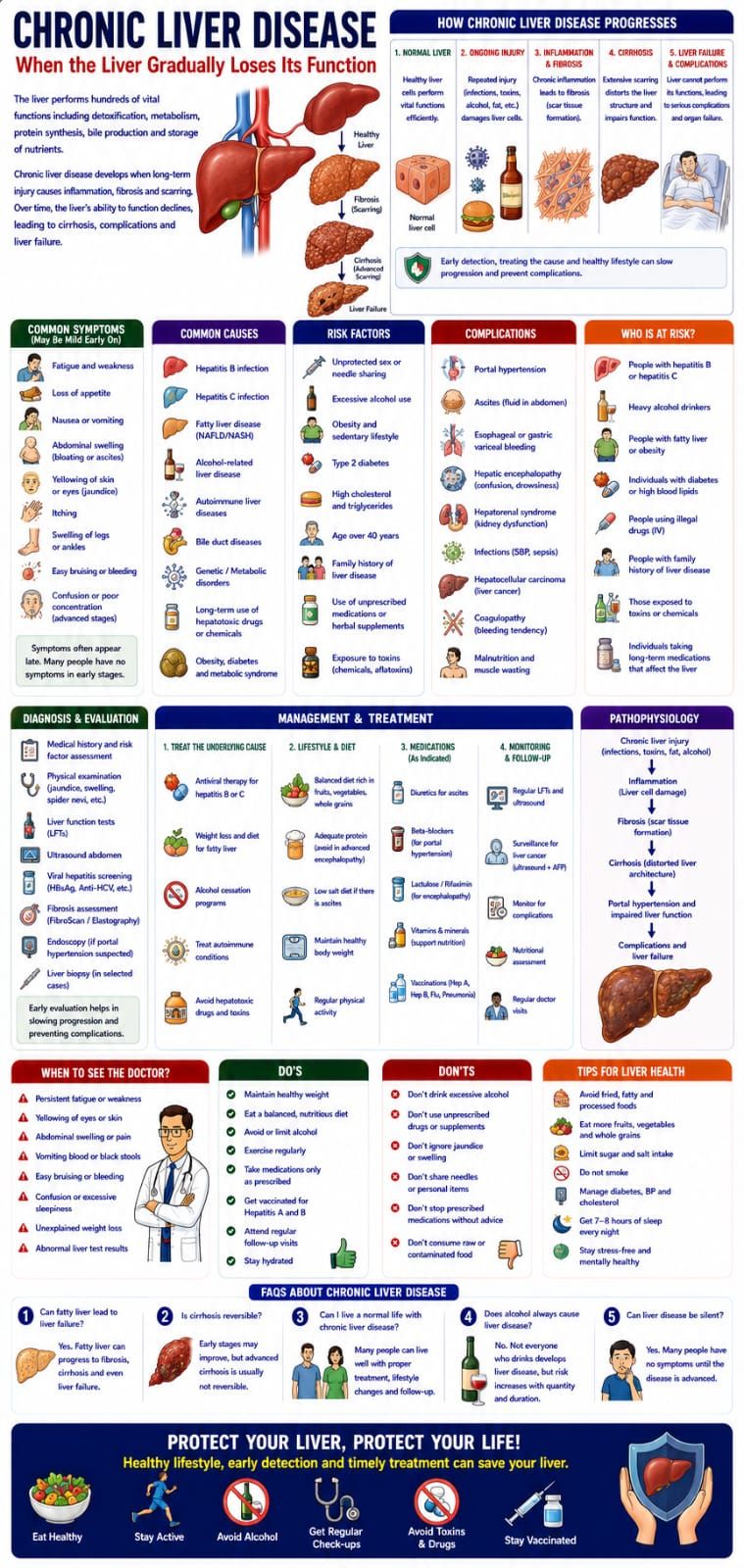
The liver is one of the body’s most remarkable and multifunctional organs. It performs hundreds of essential tasks, including detoxification, metabolism, protein synthesis, bile production, nutrient storage, and regulation of blood chemistry.
Chronic Liver Disease develops when long-standing injury gradually damages liver cells and replaces healthy tissue with fibrosis and scarring. Over time, the liver’s ability to perform its vital functions declines, potentially leading to cirrhosis, portal hypertension, and liver failure.
In the early stages, the disease may remain silent. However, progressive liver damage eventually affects multiple organ systems and overall health.
For the physician, chronic liver disease represents a complex metabolic, vascular, infectious, and systemic disorder requiring early recognition and long-term management.
General Readers
Chronic Liver Disease may develop slowly over many years.
Common symptoms include:
• Fatigue and weakness
• Loss of appetite
• Nausea
• Abdominal swelling
• Yellow discoloration of eyes or skin (jaundice)
Some individuals may also develop:
• Swelling of legs
• Itching
• Easy bruising
• Confusion in advanced stages
Common causes include:
• Hepatitis B and C infections
• Fatty liver disease
• Alcohol-related liver damage
Medical Students
Chronic Liver Disease refers to progressive hepatic injury resulting in fibrosis and impaired liver function.
Key Pathological Features
• Chronic inflammation
• Hepatic fibrosis
• Cirrhosis in advanced stages
Common Causes
• Viral hepatitis
• Non-alcoholic fatty liver disease (NAFLD)
• Alcoholic liver disease
• Autoimmune liver disorders
• Metabolic diseases
Complications
• Portal hypertension
• Ascites
• Variceal bleeding
• Hepatic encephalopathy
• Hepatocellular carcinoma
Liver function tests and imaging play major diagnostic roles.
Young Doctors
Chronic liver disease management requires a systemic and preventive approach.
Clinical priorities:
• Identify underlying etiology early
• Assess:
◦ Jaundice
◦ Ascites
◦ Nutritional status
◦ Signs of portal hypertension
Important considerations:
• Monitor for decompensation:
◦ GI bleeding
◦ Encephalopathy
◦ Infection
• Early intervention significantly improves outcomes
Careful medication review is essential because many drugs are metabolized in the liver.
General Practitioners
Chronic liver disease is increasingly common due to metabolic syndrome and viral hepatitis.
Practical Approach
• Evaluate:
◦ Alcohol intake
◦ Viral hepatitis risk factors
◦ Obesity and diabetes
Investigations
• Liver function tests
• Ultrasound abdomen
• Viral hepatitis screening
Management Principles
• Treat underlying cause
• Avoid hepatotoxic substances
• Nutritional and lifestyle optimization
• Vaccination when indicated
Regular monitoring helps detect complications early.
Pathophysiology
Chronic liver disease develops through persistent liver injury and fibrosis.
Key mechanisms include:
• Chronic inflammation
Repeated injury damages hepatocytes
• Fibrosis formation
Scar tissue gradually replaces healthy liver tissue
• Portal hypertension
Blood flow resistance increases within the liver
• Progressive hepatic dysfunction
Detoxification, protein synthesis, and metabolic regulation decline
These changes eventually affect multiple body systems.
When to See the Doctor
Medical consultation is necessary if:
• Persistent fatigue or jaundice develops
• Abdominal swelling occurs
• Liver tests become abnormal
• There is history of hepatitis, alcohol misuse, or fatty liver disease
Early diagnosis can slow disease progression significantly.
Chronic Liver Disease is a condition in which progressive and long-standing injury gradually impairs one of the body’s most vital organs. Though the liver possesses remarkable regenerative capacity, persistent inflammation and fibrosis eventually compromise its function.
For the physician, management focuses on identifying the underlying cause, preventing complications, and preserving liver function.
For the patient, lifestyle modification, avoidance of toxins, and regular monitoring are critically important.
The liver works silently every day to maintain internal balance, and protecting its health requires long-term awareness and care.
Dos and Don’ts
Do
• Maintain healthy body weight
• Control diabetes and metabolic risk factors
• Attend regular follow-up and liver monitoring
• Avoid unnecessary medications and toxins
Don’t
• Consume excessive alcohol
• Ignore jaundice or abdominal swelling
• Use unregulated herbal or toxic substances excessively
• Delay evaluation of abnormal liver tests
FAQs About Chronic Liver Disease
1. Can fatty liver lead to chronic liver disease?
Yes. Fatty liver disease may progress to fibrosis and cirrhosis.
2. Is chronic liver disease reversible?
Early stages may improve, but advanced cirrhosis is often permanent.
3. Why does abdominal swelling occur?
Fluid accumulates due to portal hypertension and reduced liver function.
4. Can chronic liver disease affect the brain?
Yes. Advanced disease may cause hepatic encephalopathy.
5. Can liver disease remain silent for years?
Yes. Many patients remain asymptomatic in early stages.


By Dr. Mohammed Tanweer Khan
A Proactive/Holistic Physician
Founder of WithinTheBody.com