Bronchial Asthma: When the Airways Become Overly Sensitive
Introduction
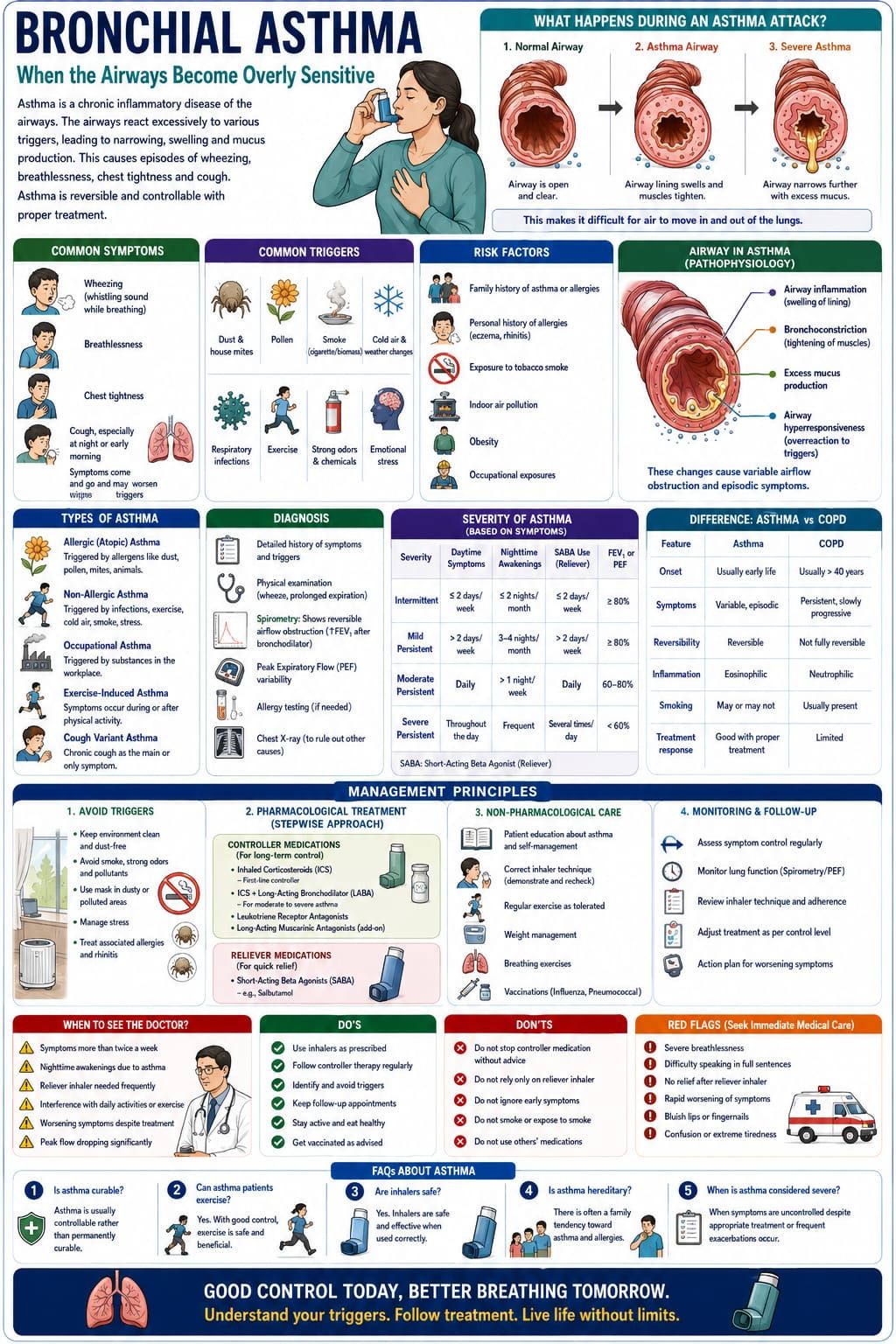
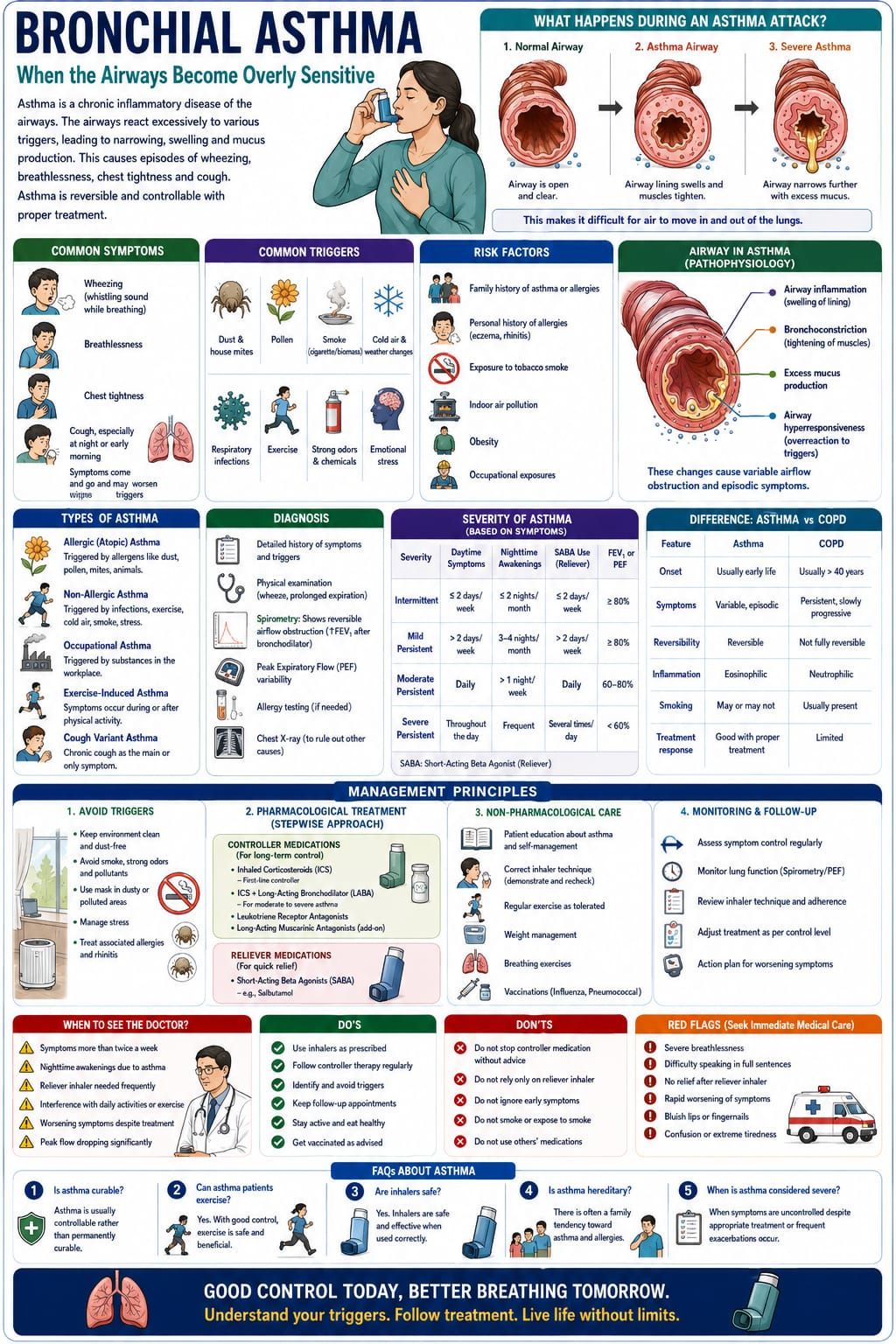
Bronchial asthma is one of the most common chronic respiratory disorders seen in clinical practice. It is characterized not merely by breathing difficulty, but by an exaggerated sensitivity of the airways to various triggers.
In asthma, the airways do not remain calm and stable. Instead, they react excessively to allergens, infections, cold air, exercise, smoke, or emotional stress. This reaction leads to narrowing of the air passages, causing episodes of breathlessness and wheezing.
Unlike many chronic lung diseases, asthma is largely reversible and controllable when recognized early and managed properly.
For the physician, asthma represents a condition where understanding triggers, airway inflammation, and long-term control is just as important as relieving acute symptoms.
General Readers
Asthma affects the tubes (airways) that carry air in and out of the lungs.
During an asthma attack:
• Airways become narrow
• Their lining becomes swollen
• Excess mucus may form
This makes breathing difficult.
Common symptoms include:
• Wheezing (whistling sound while breathing)
• Breathlessness
• Chest tightness
• Cough, especially at night or early morning
Symptoms often come and go and may worsen after exposure to dust, smoke, cold air, exercise, or allergies.
Medical Students
Bronchial asthma is a chronic inflammatory airway disorder characterized by:
• Airway hyperresponsiveness
• Variable airflow obstruction
• Reversible bronchoconstriction
Key Features
• Chronic eosinophilic inflammation (commonly)
• Intermittent symptoms
• Trigger-induced exacerbations
Diagnosis
• Clinical history
• Spirometry showing reversible airflow obstruction
• Peak expiratory flow variability
Asthma severity and control should both be assessed separately.
Young Doctors
Asthma management requires a stepwise and preventive approach.
Clinical priorities:
• Identify triggers and severity
• Assess frequency of symptoms and nighttime awakenings
Important considerations:
• Differentiate asthma from COPD and cardiac causes of wheeze
• Evaluate inhaler technique carefully
• Avoid over-reliance on short-acting bronchodilators alone
Long-term control of inflammation is essential, not just symptom relief.
General Practitioners
Asthma is commonly encountered in primary care across all age groups.
Practical Approach
• Detailed history:
• Trigger exposure
• Family history of allergies
• Seasonal variation
• Physical examination:
• Wheeze
• Prolonged expiration
Management Principles
• Patient education:
• Correct inhaler use
• Trigger avoidance
• Pharmacological therapy:
• Inhaled bronchodilators
• Inhaled corticosteroids for long-term control
Regular follow-up improves disease control and reduces exacerbations.
Pathophysiology
Asthma develops through chronic airway inflammation and hypersensitivity.
Key mechanisms include:
• Airway inflammation
Swelling and infiltration by inflammatory cells
• Bronchoconstriction
Contraction of airway smooth muscles
• Excess mucus production
Further narrows the airway lumen
• Airway hyperresponsiveness
Airways react excessively to triggers
These mechanisms cause variable airflow limitation and episodic symptoms.
When to See the Doctor
Medical consultation is necessary if:
• Wheezing or breathlessness occurs repeatedly
• Nighttime cough becomes frequent
• Symptoms interfere with activity or sleep
• Relief inhalers are needed frequently
Urgent medical attention is required in severe breathing difficulty.
Bronchial asthma is a condition of exaggerated airway sensitivity, where the lungs react excessively to otherwise manageable stimuli. Though chronic in nature, asthma is highly controllable with proper treatment and awareness.
For the physician, effective asthma care involves education, prevention, and long-term airway control.
For the patient, understanding triggers and adhering to treatment are central to maintaining normal life.
With timely management, most asthma patients can live active, healthy, and unrestricted lives.
Dos and Don’ts
Do
• Use inhalers correctly and regularly
• Avoid known triggers
• Keep follow-up appointments
• Maintain physical activity as tolerated
Don’t
• Ignore frequent symptoms
• Stop controller medications abruptly
• Smoke or allow smoke exposure
• Depend only on rescue inhalers repeatedly
FAQs About Bronchial Asthma
1. Is asthma curable?
Asthma is usually controllable rather than permanently curable.
2. Can asthma patients exercise?
Yes. With proper control, exercise is beneficial.
3. Are inhalers safe?
Yes. When properly used, they are effective and safe.
4. Is asthma hereditary?
There is often a family tendency toward asthma and allergies.
5. When is asthma considered severe?
When symptoms remain uncontrolled despite appropriate treatment.


By Dr. Mohammed Tanweer Khan
A Proactive/Holistic Physician
Founder of WithinTheBody.com